
What Happens During a Professional Trash Bin Cleaning?
Published 5/30/2026 · Updated 9/8/2026 · By Cole McCauley, Founder
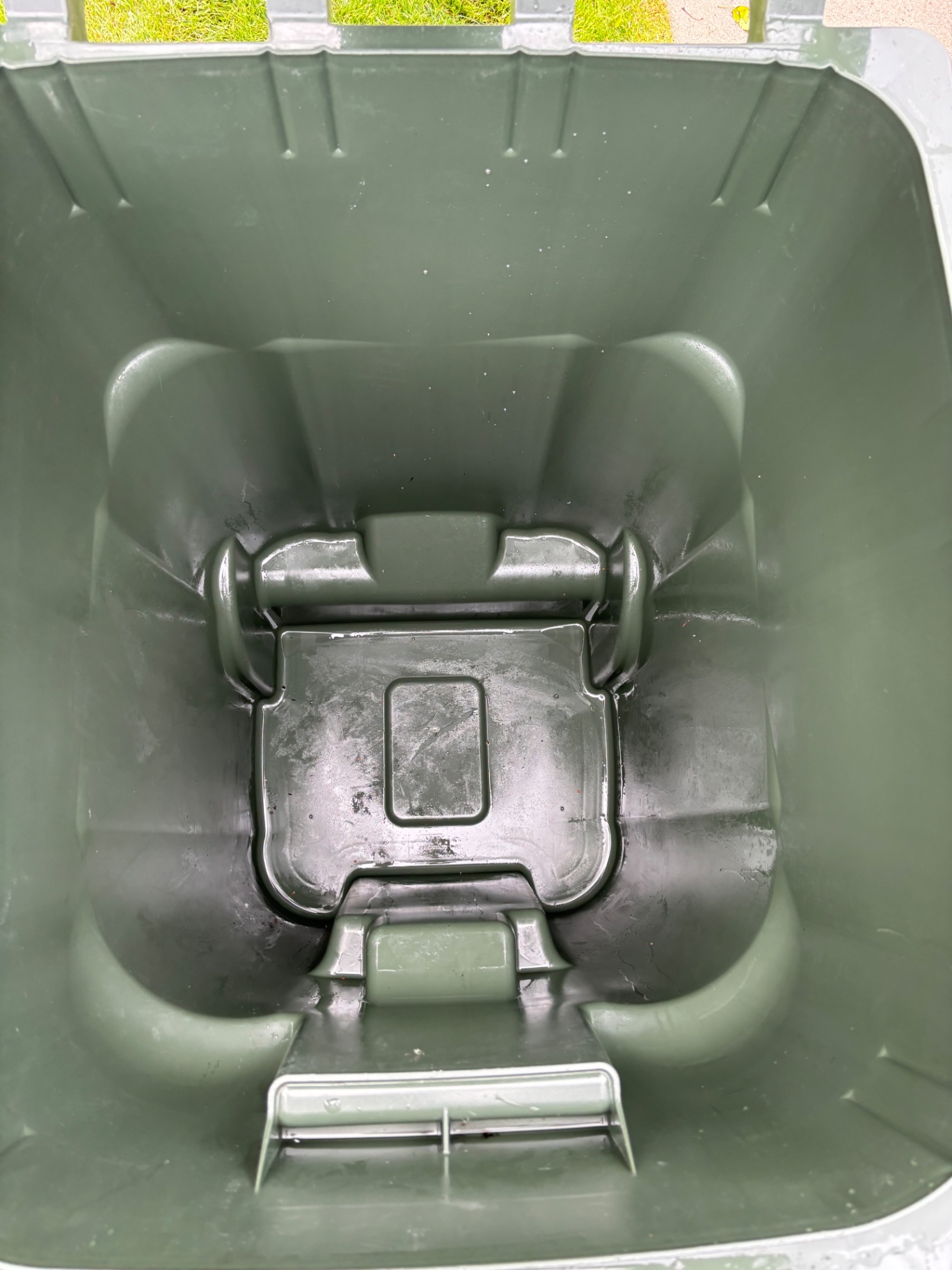
If you've never had your bins professionally cleaned, the process is more interesting than people expect. It's not a guy with a hose. It's a full mobile pressure-wash and reclamation system on a truck. Here's exactly what happens, start to finish, from a local trash can cleaning service.
Before We Show Up
The night before service, we send a reminder so you know to leave your bins out after trash pickup. We always clean the day of or the day after your regular trash day — that way the bin is as empty as possible and we're not cleaning around a full week's garbage.
You don't need to be home. You don't need to roll the bins anywhere. Just leave them where the trash truck left them.
Step 1: Inspection
First thing we do is lift the lid and look. We check for:
- Leftover bagged trash (we'll work around it)
- Active maggot or fly infestation (changes the chemicals we use)
- Cracks or damage we should know about
- How much residue has built up — light, medium, or "this needs the works"
This 15-second look tells us exactly which settings to dial in for your bin specifically.
Step 2: The Bin Goes Into the Cleaning Bay
The truck has a fully enclosed cleaning bay on the back. The bin is loaded in, lid open, upside down or tilted depending on the unit. Everything that happens next happens inside that bay — sealed off from your driveway, your lawn, and the street.
Step 3: Hot Water, High Pressure
This is the part that does the real work. Water is heated on the truck to 180°F+ and forced through rotating high-pressure jets inside the bin. Two things happen at once:
- The heat melts grease and kills bacteria, mold, and fly eggs.
- The pressure physically lifts the biofilm — that thin invisible layer of residue bonded to the plastic — off every surface.
This is what a garden hose physically cannot do. Cold water doesn't sanitize. A standard hose nozzle doesn't produce enough pressure to break the residue bond. That's not a sales pitch — it's just physics.
Step 4: Sanitizing & Deodorizing
Once the bin is mechanically clean, we apply a food-safe sanitizing solution. This kills anything the hot water missed — bacteria, viruses, lingering odors — and leaves the inside not just clean, but smelling fresh. Our customers love that their bins come back smelling like lemons. It's a real, clean scent — not an overpowering chemical smell — just a light, fresh lemon fragrance that lets you know the bin has been fully sanitized.
Step 5: Wastewater Capture
Here's the part most homeowners don't realize matters as much as it does. All of the dirty water — every drop — is vacuumed back into a holding tank on the truck. It does not pour out onto your driveway. It does not run down the gutter. It does not soak into your lawn.
That dirty water is later disposed of at an approved wastewater facility. In a lot of cities, including parts of the Treasure Valley, letting bin wastewater run into the storm drain is technically a stormwater violation. Doing this right is one of the biggest reasons hosing out your own bin causes problems — the water has to go somewhere, and "your driveway" isn't a great answer.
Step 6: Drain and Return
The bin sits long enough to drain (just a minute or two — high pressure dries surfaces faster than you'd expect), then we put it right back where we found it. Lid closed, ready for next week's trash.
Total Time at Your Curb
About 5–7 minutes per bin. You'll often miss it if you blink. The whole process from pulling up to driving away is fast because the truck is purpose-built for it.
What You'll Notice After
- The inside looks dramatically lighter — sometimes you can actually see the original color of the plastic again.
- The smell is fresh and lemon-clean — not masked, actually sanitized.
- No flies hanging around the bin for the next several days.
- Your driveway is dry. No suds, no runoff.
A Story From the Field
One of my favorite jobs was a customer who'd just moved into a house in Boise and inherited the previous owner's bins. They were rough — months of build-up, lid hinges full of old residue, the works. After one cleaning she opened the lid, stuck her head over, and said, "Wait — it just smells like… plastic." That's the moment. That's what a real cleaning does.
The Question Everyone Asks Next
"How often should I have this done?" Honest answer: depends on you. If you've got kids, pets, or you don't want to think about it, monthly. If you don't mind keeping your bin hosed out between visits, quarterly is plenty. We never push monthly on someone who doesn't need it.
And the Other Question Everyone Asks
"How much?" $25 per can. Most people assume it's three or four times that. It isn't. That's part of why we end up cleaning so many bins on the same street — once one neighbor finds out it's $25, the conversation spreads.
Want to See It Yourself?
We serve Boise, Meridian, Eagle, Star, Kuna, Nampa, and Caldwell. Get a free quote and we'll get you on the schedule. The first time you smell the inside of a freshly cleaned bin, you'll get it.
Ready for a bin that actually smells clean?
Quarterly cleaning is our most popular plan — just $25.95 per can.
View pricing & plans →