DIY Trash Can Cleaning vs Professional Service
Published 5/30/2026 · Updated 9/8/2026 · By Cole McCauley, Founder
Most articles like this exist to convince you to hire someone. I'm going to do something different — give you a straight comparison, including who should keep cleaning their own bins. I run a bin cleaning company in Boise, and I tell customers all the time: if hosing out your bin is easy for you and you don't mind it, keep doing it. Here's the honest breakdown.
DIY: What You're Actually Doing
A typical home approach looks like this: drag the bin to the driveway, spray it out with a hose, maybe a squirt of dish soap, maybe a splash of bleach, flip it to drain, drag it back.
What it does well:
- Removes loose chunks of trash and visible grime.
- Cuts down surface smell in the short term.
- Free (other than your time).
What it can't do:
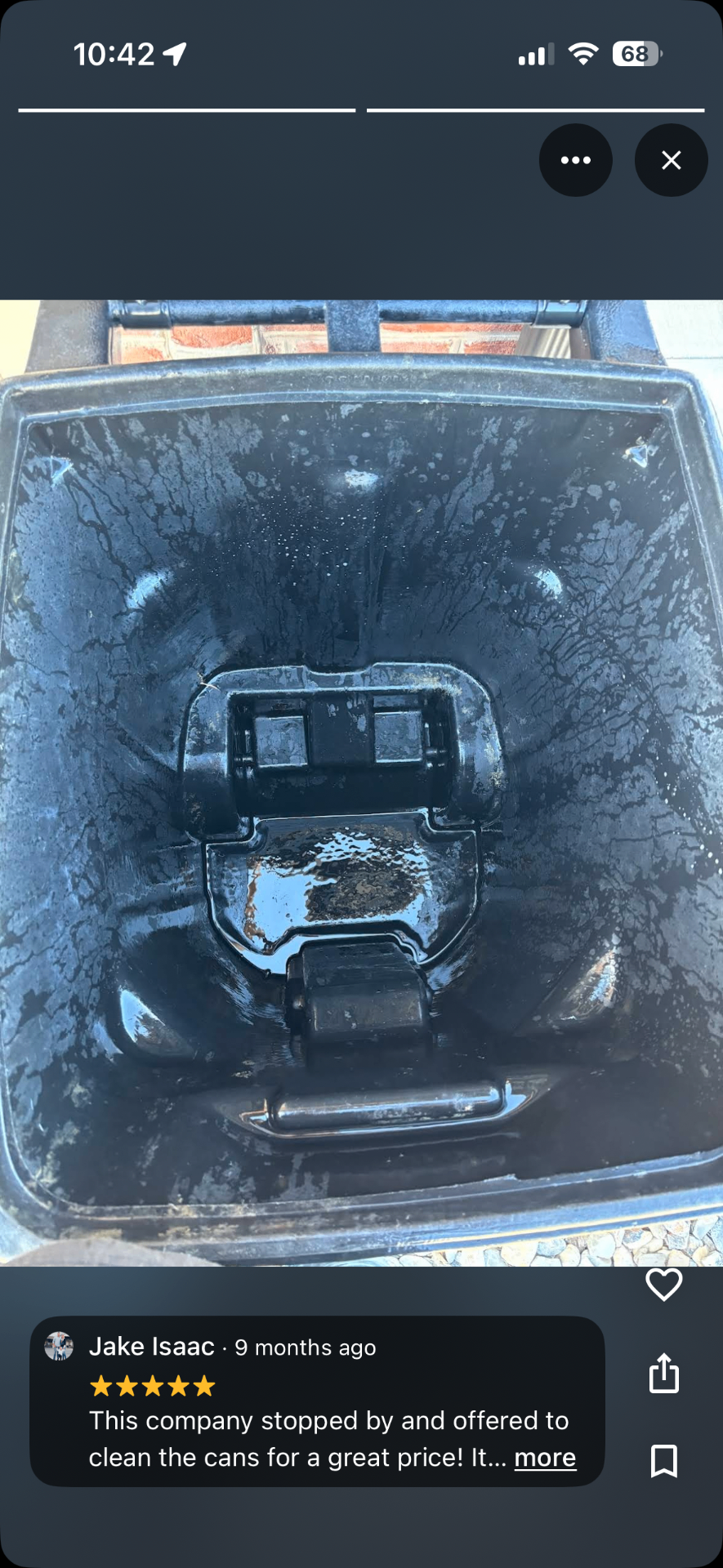
- Sanitize. Cold water doesn't kill bacteria, mold, or fly eggs. Bleach in a closed bin only touches the surfaces it reaches.
- Break the biofilm. The thin sticky residue bonded to the plastic — what flies and rodents actually detect — requires hot water and pressure to lift.
- Contain the wastewater. The dirty water has to go somewhere. Usually your driveway, lawn, or the street, where it ends up in the storm drain. In many cities that's technically not allowed.
And there's a real safety angle people overlook. I had a customer who hosed out his own can and got splash-back on his forearm. A few days later he was on antibiotics for a staph infection. The inside of an old, neglected bin has been quietly accumulating bacteria for months. If you DIY, wear real gloves, long sleeves, and eye protection. Don't do it in shorts and flip-flops.
Professional Cleaning: What's Different
A truck-mounted bin cleaning service does three things a hose physically can't:
- Hot water (180°F+). Melts grease, kills bacteria, breaks down organic residue.
- High-pressure jets. Lift the invisible biofilm off the plastic — not just the visible chunks.
- Wastewater capture. The dirty water gets vacuumed back into the truck and disposed of properly. Your driveway stays dry.
Add in sanitizer applied to the inside surfaces, and the bin actually goes back to neutral — not just "less bad." Most homeowners are genuinely surprised the first time they sniff inside a freshly cleaned bin. It smells like nothing.
The Cost Comparison Most People Get Wrong
Here's the part where people are usually shocked. Customers assume professional bin cleaning costs $80–$100 per visit. It doesn't. We charge $25 per can. When people hear that, the conversation immediately changes — because the value calculation is completely different than they assumed.
Compare:
- DIY: $0 in materials, but 20–30 minutes of unpleasant work, plus the safety risk and the mess of wastewater on your driveway.
- Professional: $25 per can, 0 minutes of your time, no mess, no exposure risk.
For a lot of homeowners, the math becomes obvious once they realize the price isn't what they thought it was.
The Hybrid Approach (My Actual Favorite)
Here's what I tell people who genuinely don't mind maintaining their own bin: keep doing it. If hosing it out is easy for you and you find it satisfying, you're saving money and staying involved. That's great.
But pair it with quarterly professional cleanings. Four times a year, we come reset the bin with hot water, pressure, sanitizer, and contained wastewater. Between visits, you keep up with your hose rinse. The bin stays genuinely clean year-round and you spend a fraction of what monthly costs.
That's the option I recommend most often to hands-on customers, and it's almost never offered by bin cleaning companies because it doesn't push you into a monthly plan.
A Quick Story
One of the most memorable cleanings I ever did was a neighbor of an existing customer. I offered to do hers while I was on the street. She said she'd just cleaned it recently herself, so probably not. The bins were right there, so we popped the lid to check together. It was full of maggots. She'd genuinely tried, but a hose rinse doesn't pull out the residue that flies are attracted to. She got on monthly service that day and a year later still tells me it's one of the simplest decisions she's made.
Where DIY Wins
- One-bin households with light trash. A rinse every couple weeks is genuinely fine.
- People who enjoy outdoor cleaning chores. Some people like it. No shame in that.
- Mild months (October–March). Cool weather means slower bacterial growth, so DIY holds up better.
Where Professional Wins
- Families with kids or pets
- Anyone who's seen maggots in their bin (you remember)
- Bins that sit in direct summer sun
- Homes near the Boise foothills or near greenbelt areas where flies are constant
- Anyone who finds the whole task gross (which is most people)
- Move-in / move-out resets
Bottom Line
DIY works fine for some homes, especially with realistic expectations and a hybrid quarterly schedule. For most homes, professional cleaning is worth the $25 a can — both for the result and for the relief of not thinking about it. And if you're going to DIY, please wear gloves.
If you're in the Treasure Valley and want to figure out the right approach for your home, get a free quote and we'll give you a straight recommendation — including telling you if quarterly is plenty.
Ready for a bin that actually smells clean?
Quarterly cleaning is our most popular plan — just $25.95 per can.
View pricing & plans →