
Can Dirty Trash Cans Attract Rats and Pests?
Published 5/30/2026 · Updated 9/8/2026 · By Cole McCauley, Founder
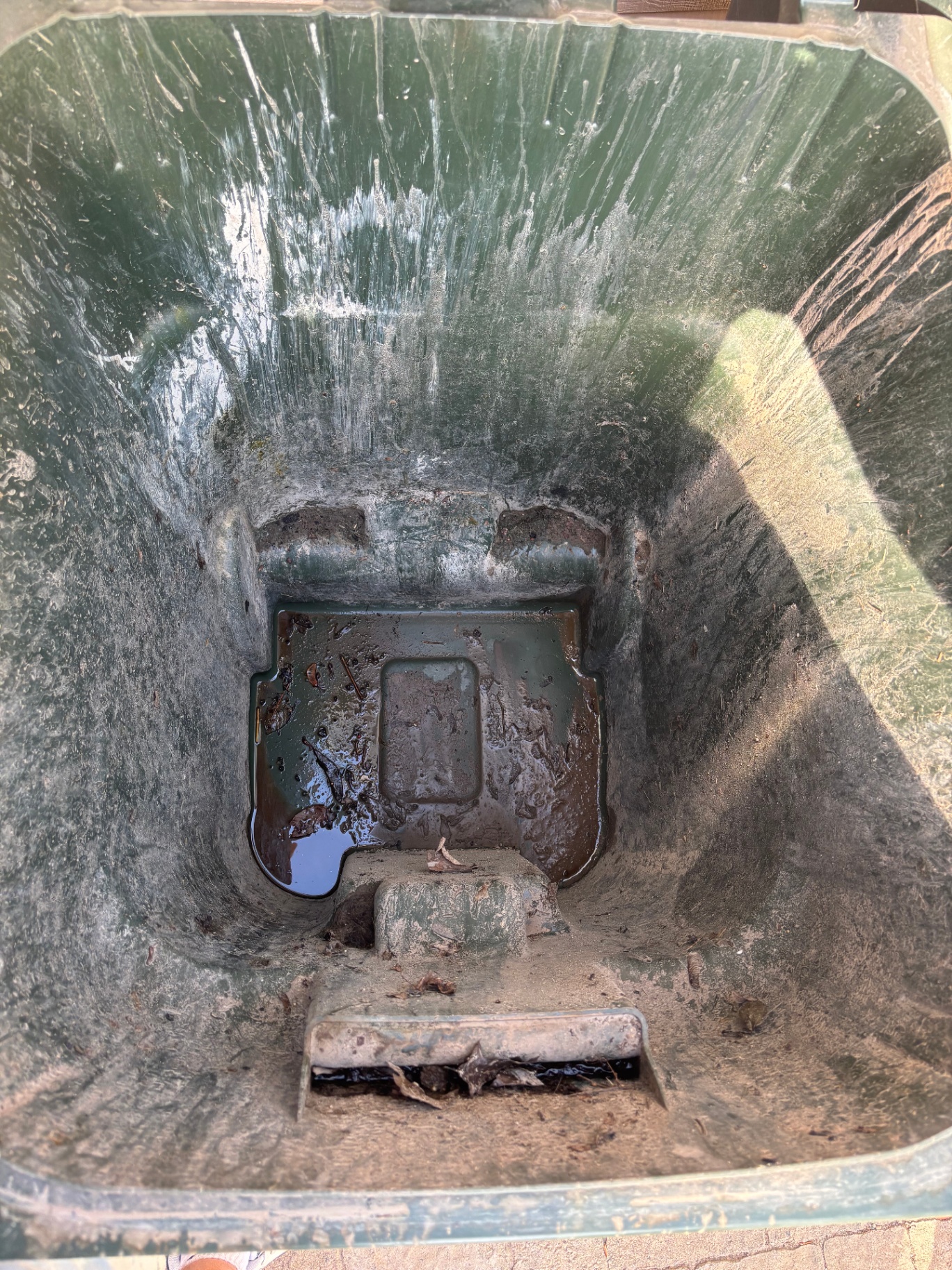
Short answer: yes, and worse than most people think. A trash can isn't just a container — it's a slow-cooking buffet of grease, food residue, and bacteria sitting in your side yard. Rats, mice, raccoons, and flies don't just notice; they map your house onto their daily route.
What Pests Are Actually Looking For
People assume pests come for the trash. They don't, exactly. They come for the smell of trash — the breakdown of organic material that releases volatile compounds rats and flies can detect from impressive distances. A rat can pick up food odors from over 50 feet away. A blowfly can detect a single rotting protein source from much farther than that.
That means even a "mostly clean" can with a coating of residue on the bottom — the kind of film you can't really see — is a flashing neon sign to nearby pests.
The Pest Lineup in the Treasure Valley
Flies and Maggots
This is what we see most. People drastically underestimate how attractive their bin is to flies. We've opened "clean-looking" cans in Boise neighborhoods and found maggots writhing in the seams of the lid. Flies don't need a pile of garbage to lay eggs — they need a smell. Your bin gives them that for free, year-round.
Rats and Mice
Rodents are opportunists. Once they identify your bin as a reliable food smell, they start scouting nearby structures — your garage, your shed, the corner of your house — for nesting. A dirty bin doesn't just attract rats; it tells them this is a safe neighborhood to settle in.
Raccoons and Skunks
If you've ever woken up to trash strewn across your driveway, you already know. A clean bin smells far less interesting at 2 a.m. than one with sticky residue baked into the bottom.
Wasps and Yellowjackets
Late summer in Idaho is wasp season, and a sweet residue in your recycling can — soda, fruit juice, beer — turns it into a hive magnet.
Cockroaches
Less common in our climate than in the South, but not unheard of. They love the same thing flies love: warm, moist, organic residue.
A Real Story From a Boise Driveway
One of my favorite memories from this business — and one I'll never forget — is from a day I was cleaning a customer's bins. Their neighbor came out and we got talking. I asked if she wanted hers done too. She told me she'd just cleaned them recently, so probably not. But her cans were right there, so we walked over and lifted the lid to check together.
It was packed with maggots. Hundreds of them.
She was floored — she had honestly tried to clean it. The reality is that a quick rinse doesn't remove the biofilm flies are actually attracted to. Within a few days of being "cleaned," a bin can be right back to being a pest magnet because the smell was never really gone. She got on our monthly schedule that afternoon and now doesn't think about her bins at all.
Why Hosing Out Your Bin Doesn't Actually Solve It
I get this question a lot. "Why can't I just spray it out with a hose?" Honestly — you can, and it's better than nothing. But:
- Cold water doesn't kill bacteria, fly eggs, or pathogens.
- The biofilm — that thin sticky layer pests detect — is bonded to the plastic. It needs heat, pressure, and detergent to break loose.
- The wastewater has to go somewhere. Most people end up rinsing it onto their driveway or lawn, which just relocates the smell.
- Many cities ask homeowners not to let bin wastewater flow into the storm drain. It's technically pollution.
And here's the part I really care about: cleaning a bin yourself can be a health risk. I had a customer who tried to handle a bad one himself with a hose and brush. Splash hit his forearm, and a few days later he had a staph infection serious enough to need antibiotics. He's been a monthly customer ever since. That story sticks with me — most people don't realize the inside of an old bin is full of bacteria, mold, and decomposing protein.
What Actually Removes the Pest Attractant
To genuinely eliminate the smell that draws pests, three things have to happen:
- Heat. Water at 180°F+ breaks down grease and kills bacteria.
- Pressure. High-pressure jets blast residue off the plastic — not just the visible chunks, the invisible biofilm.
- Contained wastewater. The dirty water gets vacuumed, captured, and disposed of properly — not left to soak into your driveway.
That's what professional truck-mounted bin cleaning does. It's also why a one-time scrub at home rarely fixes a recurring pest problem.
How Often Is "Often Enough"?
We tell customers honestly: it depends on your habits.
- Monthly — if you have a family, pets, or you bag food scraps loose.
- Quarterly — if you're already pretty careful, bag everything tight, and don't mind rinsing your bin yourself between visits. This is what we recommend for our most hands-on customers.
- One-time deep clean — to reset a bad situation before deciding on a schedule.
We genuinely don't push monthly on people who don't need it. If hosing your own can is something you don't mind doing, a couple of professional deep cleans a year is plenty.
The Bigger Point
Pest problems usually don't start at the foundation of your house — they start at the bin in your side yard. Clean the source of the smell and the rest of the problem tends to fade on its own.
If you've been seeing more flies, hearing things in your garage, or finding scattered trash in the morning, your bin is a great place to start. Clean The Cans covers Boise, Meridian, Eagle, Star, Kuna, Nampa, and Caldwell. Get a free quote and we'll get the smell — and the pests — out of your yard.
Ready for a bin that actually smells clean?
Quarterly cleaning is our most popular plan — just $25.95 per can.
View pricing & plans →